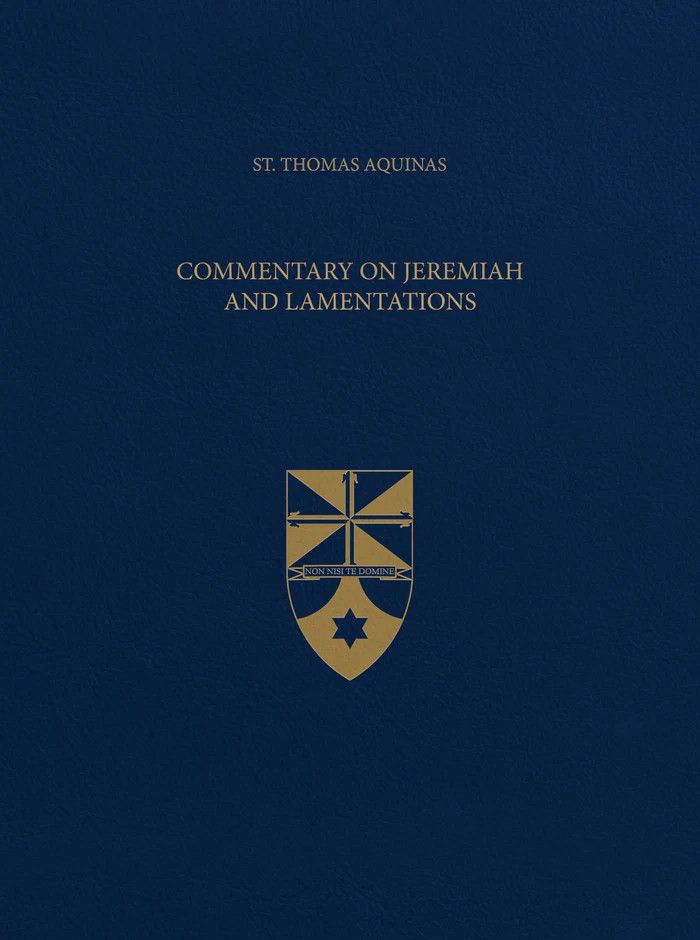
Aquinas' Commentary on Jeremiah and Lamentations (Latin-English Opera Omnia)
SKU G0036
$59.95
Pre-order
St Thomas Aquinas - The Aquinas Institute - Emmaus Academic
Out of stock, available for pre-order
1
Product Details
The commentaries on Jeremiah and Lamentations were likely written near the end of Thomas Aquinas’s time with Albert the Great in Cologne, before Aquinas left to teach in Paris in 1252. Perhaps even more so than his commentary on Isaiah, these commentaries are “cursory,” succinct and focused on an understanding of the literal meaning of the text. But, as Aquinas himself explains in the prologues to these commentaries, the literal sense of these texts is filled with written wisdom—a divine wisdom that aids us in the attainment of our end of living well and our ultimate end of the glory of immortality. The commentary on Jeremiah also includes collationes, collections of scriptural texts connected with the passage at hand and useful for prayer, study, and preaching.
Notes on text:
The Latin text of Thomas Aquinas's commentaries on Jeremiah and on Lamentations has been adapted from the Parma edition (1863). English translations of Scripture texts are based on the Douay-Rheims version of the Bible, but they have been revised to correspond more closely to the sense of Aquinas's commentaries. The English translation of Thomas Aquinas's commentary on Jeremiah was prepared by Rev. Benjamin Martin. The English translation of Thomas Aquinas's commentary on the Lamentations of Jeremiah was prepared by Mark Foudy.
Save this product for later
Customer reviews
Reviews only from verified customers
No reviews yet. You can buy this product and be the first to leave a review.
Aquinas' Commentary on Jeremiah and Lamentations (Latin-English Opera Omnia)
You May Also Like
Aquinas' Commentary on the Letters of Saint Paul: Complete Set (Latin-English Opera Omnia)
Aquinas' Commentary on the Letters of Saint Paul: Complete Set (Latin-English Opera Omnia)
St Thomas Aquinas - The Aquinas Institute - Emmaus Academic
$254.95
Aquinas' Commentary on Isaiah (Latin-English)
Aquinas' Commentary on Isaiah (Latin-English)
St Thomas Aquinas - The Aquinas Institute - Emmaus Academic
$59.95
Pre-order
Aquinas' Commentary on the Letter of Saint Paul to the Romans (Latin-English Opera Omnia)
Aquinas' Commentary on the Letter of Saint Paul to the Romans (Latin-English Opera Omnia)
St Thomas Aquinas - Fr Fabian Larcher, OP - The Aquinas Institute - Emmaus Academic
$59.95
Aquinas Opuscula I Treatises (Latin-English Opera Omnia)
Aquinas Opuscula I Treatises (Latin-English Opera Omnia)
St Thomas Aquinas - The Aquinas Institute - Emmaus Academic
$59.95
Aquinas' Commentary on the Book of Job (Latin-English Opera Omnia)
Aquinas' Commentary on the Book of Job (Latin-English Opera Omnia)
St Thomas Aquinas - The Aquinas Institute - Thomas Becket Mullady, OP, STD - Emmaus Academic
$59.95
Aquinas' Commentary on the Letters of Saint Paul to the Corinthians (Latin-English Opera Omnia)
Aquinas' Commentary on the Letters of Saint Paul to the Corinthians (Latin-English Opera Omnia)
St Thomas Aquinas - Fr Fabian Larcher, OP - The Aquinas Institute - Emmaus Academic
$59.95
Aquinas' Commentary on the Letter of Saint Paul to the Hebrews (Latin-English Opera Omnia)
Aquinas' Commentary on the Letter of Saint Paul to the Hebrews (Latin-English Opera Omnia)
St Thomas Aquinas - Fr Fabian Larcher, OP - The Aquinas Institute - Emmaus Academic
$59.95
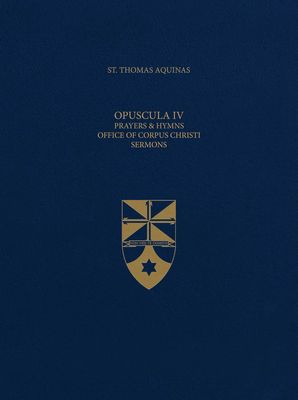
Aquinas Opuscula IV Prayers & Hymns, Office of Corpus Christi, Sermons (Latin-English Opera Omnia)
Aquinas Opuscula IV Prayers & Hymns, Office of Corpus Christi, Sermons (Latin-English Opera Omnia)
St Thomas Aquinas - The Aquinas Institue - Emmaus Academic
$59.95
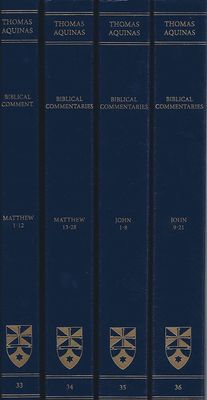
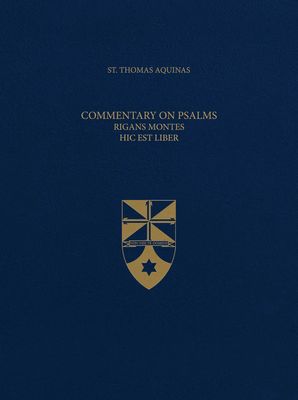
Aquinas' Commentary on Psalms (Latin-English) Imitation Leather
Aquinas' Commentary on Psalms (Latin-English) Imitation Leather
St Thomas Aquinas - Emmaus Academic
$59.95
Pre-order
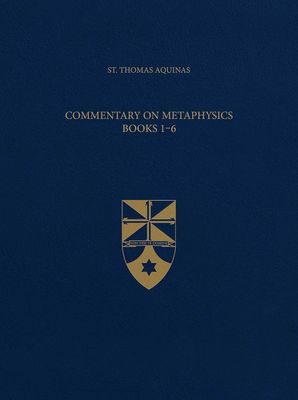
Aquinas' Commentary on Metaphysics Books 1-6 (Latin-English Opera Omnia)
Aquinas' Commentary on Metaphysics Books 1-6 (Latin-English Opera Omnia)
St Thomas Aquinas - Emmaus Academic
$59.95
Pre-order
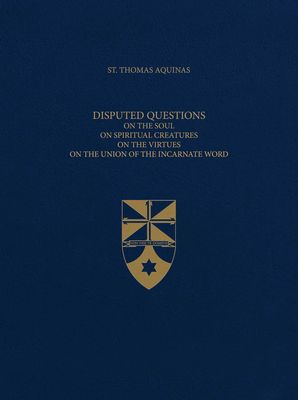
Aquinas' Disputed Questions on the Soul, On Spiritual Creatures, On the Virtues, On the Union of the Incarnate Word (Latin-English Opera Omnia)
Aquinas' Disputed Questions on the Soul, On Spiritual Creatures, On the Virtues, On the Union of the Incarnate Word (Latin-English Opera Omnia)
St Thomas Aquinas and The Aquinas Institute - Emmaus Academic
$59.95
Pre-order
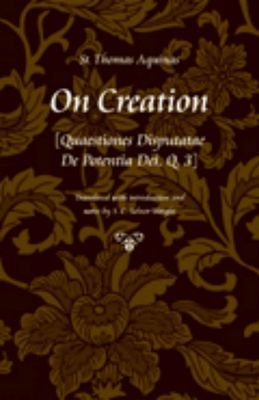
On Creation: Quaestiones Disputatae de Potentia Dei, Q. 3
On Creation: Quaestiones Disputatae de Potentia Dei, Q. 3
St Thomas Aquinas, Translated by S.C. Selner and S. C. Selner-Wright - Catholic University of America Press
$24.95
Powered by Lightspeed
Display prices in:USD